


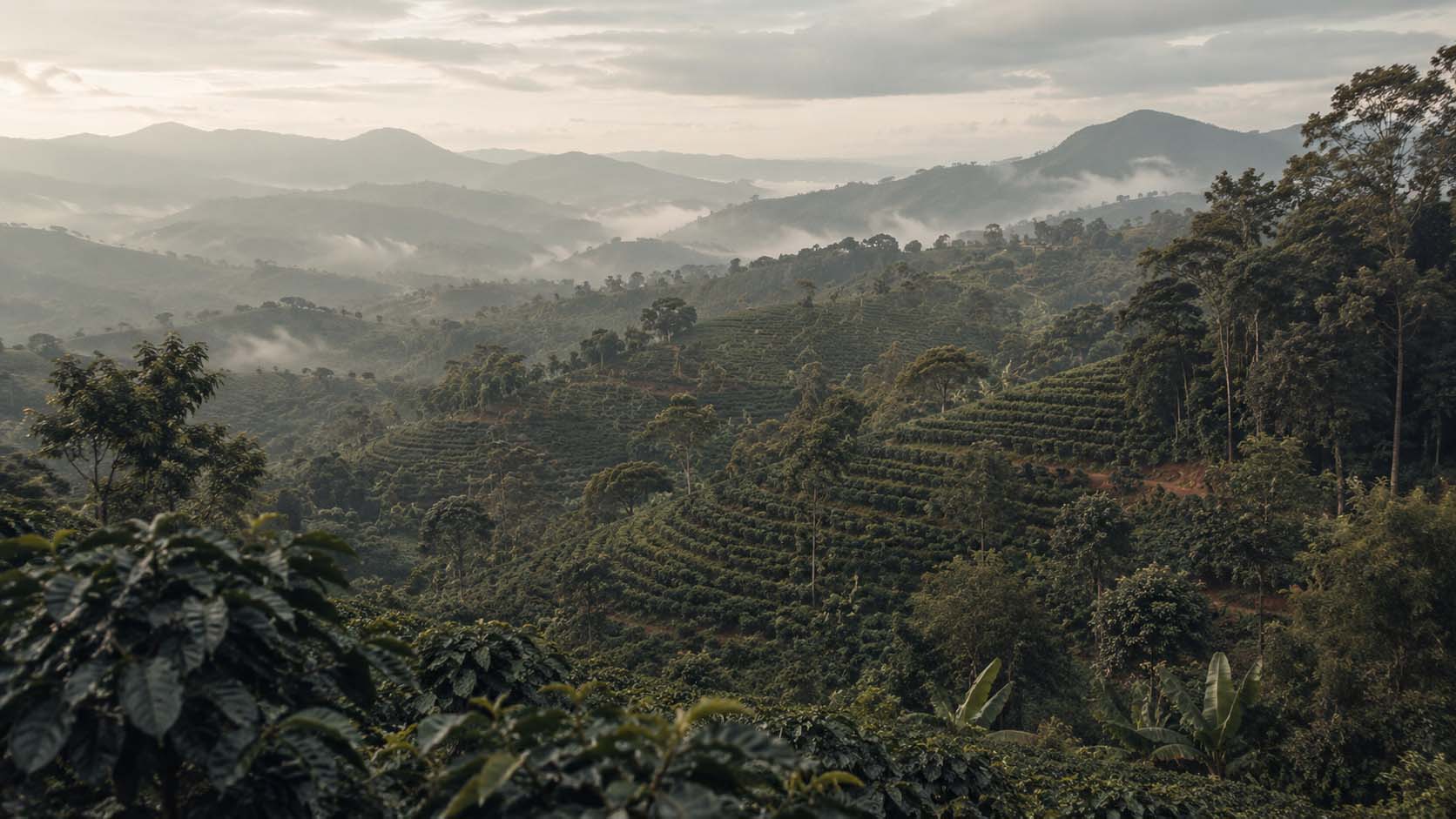
Every cup of coffee begins in the soil.
Long before a coffee reaches our roastery, before it is ground, brewed, and enjoyed, it starts as a living plant rooted in a specific place. That place matters. The soil, the shade, the rainfall, the surrounding trees, the microorganisms beneath the surface, and the people tending the farm all influence what eventually ends up in the cup.
For years, sustainability has helped coffee drinkers ask better questions. Where was this coffee grown? Was it produced responsibly? Were farmers paid fairly? Were ecosystems protected along the way?
These questions still matter. They have helped move the coffee industry toward more transparency and accountability. But as climate pressure increases across coffee-growing regions, the conversation is beginning to shift. Sustainability is no longer only about reducing harm. The next step is regeneration.
Regenerative agriculture asks a deeper question: can farming restore the land while producing something exceptional?
For Alpen Sierra Coffee, that question feels closely connected to how we think about coffee. We care about the craft, quality, organic sourcing, and the landscapes that make coffee possible. We also believe that great coffee should respect both the land where it is grown and the people who grow it.
Regenerative agriculture is a farming approach focused on improving the health of the entire farm system over time. Instead of simply maintaining current conditions, it works to rebuild soil, increase biodiversity, improve water retention, and create stronger, more resilient farms.
In coffee, regenerative practices can include composting, planting shade trees, protecting ground cover, reducing synthetic inputs, rotating or diversifying crops, and building organic matter in the soil — many of the same values behind sustainable and ethical coffee sourcing. Some coffee farms use agroforestry, i.e. shade management systems, where coffee grows beneath a canopy of trees alongside other plants, crops, and habitat.
That matters because a coffee farm is not a factory. It is a living ecosystem.
The health of that ecosystem affects everything: the strength of the coffee trees, the quality of the cherries, the resilience of the farm, and the long-term livelihood of the producer. Regenerative agriculture recognizes those relationships and works with them rather than against them.
Soil health is one of the clearest ways to understand regenerative agriculture.
Healthy soil is alive. It contains organic matter, minerals, fungi, bacteria, insects, roots, and microorganisms that work together below the surface. That living network helps support plant growth, cycle nutrients, retain water, and protect against erosion.
For coffee trees, healthy soil can make a meaningful difference. Coffee is a sensitive crop. It grows best under specific conditions, and those conditions are becoming less predictable in many coffee-growing regions. Heat, drought, heavy rain, pests, and disease can all put pressure on coffee producers.
Soil cannot solve every problem, but it can give coffee trees a stronger foundation. Soil rich in organic matter can hold moisture more effectively during dry periods. Strong soil structure can help water move through the farm without washing valuable nutrients away. Active microbial life can support nutrient availability and plant health.
This is where farm care and cup quality begin to meet.
The sweetness, balance, complexity, and character we taste in coffee are shaped by many things: coffee variety, elevation, processing, roast profile, and brewing. But none of those exist apart from the land. Coffee quality starts with the conditions that allow the plant to thrive.
Regenerative agriculture is often discussed in connection with carbon sequestration. In simple terms, carbon sequestration is the process of storing carbon in soil, plants, and trees.
On coffee farms, this can happen through practices that build soil organic matter, maintain tree cover, protect roots, and support diverse plant life. Shade trees and ground cover can also help moderate temperature, reduce erosion, and create habitat for birds, insects, and other beneficial species.
It is important to be honest here: regenerative coffee farming is not a silver bullet for climate change. No single farming practice is. But regenerative agriculture can be part of a more responsible and climate-aware future for coffee.
That future matters because coffee is already under pressure. Many coffee-growing regions are experiencing hotter temperatures, shifting rainfall, and more unpredictable seasons. For farmers, climate change is not an abstract issue. It can affect harvest timing, plant health, disease pressure, yields, and income.
Regenerative practices can help farms become more resilient. Shade trees can protect coffee plants from harsh sun. Compost can improve soil fertility. Ground cover can reduce erosion during heavy rain. Biodiversity can help create a more balanced farm environment.
Resilience is the key word. A regenerative farm is not trying to control every part of nature. It is trying to build enough strength and diversity into the system so the farm can better adapt when conditions change.
One of the most compelling ideas in regenerative coffee is that nature is not something to remove from the farm. Nature is part of the farm’s strength.
In a simplified coffee system, the landscape may be stripped down to rows of coffee plants with little else around them. A regenerative or shade-grown system is different. It is more layered. There may be native trees, fruit trees, flowering plants, birds, insects, leaf litter, fungi, and ground cover all playing a role.
That diversity helps protect the farm. Trees can provide shade, habitat, and organic material. Ground cover can protect soil from direct sun and heavy rain. Pollinators and beneficial insects can support ecological balance. Root systems can help stabilize the land.
There is also something deeply fitting about coffee grown this way. Coffee is not meant to feel disconnected from place. The best coffees carry a sense of origin: the elevation, climate, soil, processing, and care behind them.
A biodiverse farm helps preserve that sense of place.
Regenerative agriculture should never be reduced to soil and carbon alone. The people behind the coffee matter just as much and are integral in the activation and management of the processes.
A farm cannot be truly regenerative if the land is cared for but the producers are not. Farmers need fair prices, reliable relationships, technical support, and enough financial stability to make long-term decisions — values that are closely connected to both Fair Trade Certified coffee and direct trade relationships. Responsible farming takes knowledge, labor, patience, and risk. It has to be economically feasible.
This is one reason Alpen Sierra’s support for Café Femenino is so meaningful to us. Café Femenino is rooted in recognition and opportunity for women coffee producers. It reminds us that a healthier coffee system is not only environmental. It is also social.
When women producers are recognized, paid, and supported, farming communities become stronger. When consumers understand more of the story behind their coffee, the relationship between producer and drinker becomes more human.
That is part of regeneration too.
It is not just about rebuilding soil. It is about rebuilding value, dignity, and connection throughout the coffee chain.
For the person drinking the coffee, regenerative agriculture may seem far away. Most of us do not see the farm. We experience the result in a morning cup, a favorite blend, or a bag of beans on the kitchen counter.
But farm practices are part of what make that experience possible.
A thoughtfully grown coffee carries the work of many hands and many conditions. Healthy soil, careful harvesting, good processing, responsible sourcing, and attentive roasting all contribute to the final cup — the same foundation that helps define truly specialty coffee. At Alpen Sierra, we think of roasting as one step in a much longer story. Our job is to honor the work that has already happened at origin and bring out the best expression of the coffee.
Regenerative agriculture supports that larger story. It helps protect the possibility of great coffee in the years ahead. It supports farms that are more resilient, ecosystems that are more alive, and producers who are better positioned to continue their craft.
It also gives coffee drinkers a better way to think about quality. Great coffee is not only about flavor notes, roast level, or brewing method. It is also about care.
Care for the soil. Care for the producer. Care for the place. Care for the cup.
Sustainability helped the coffee industry begin asking better questions. Regeneration invites us to go further.
Can coffee farms restore soil instead of depleting it? Can they protect biodiversity instead of simplifying the landscape? Can they conserve water, store carbon, and become more resilient in a changing climate? Can they support the dignity and livelihood of the people who grow the coffee we love?
These are not small questions. But they are the right ones.
At Alpen Sierra Coffee, we believe coffee should be rooted in craft and responsibility. Every cup connects us to a landscape, a harvest, a producer, and a set of choices. Regenerative agriculture helps us see those connections more clearly.
The future of coffee will depend on healthy farms, healthy communities, and people who care enough to look beyond the surface. Regeneration points us in that direction — toward coffee that is not only sustained, but renewed.