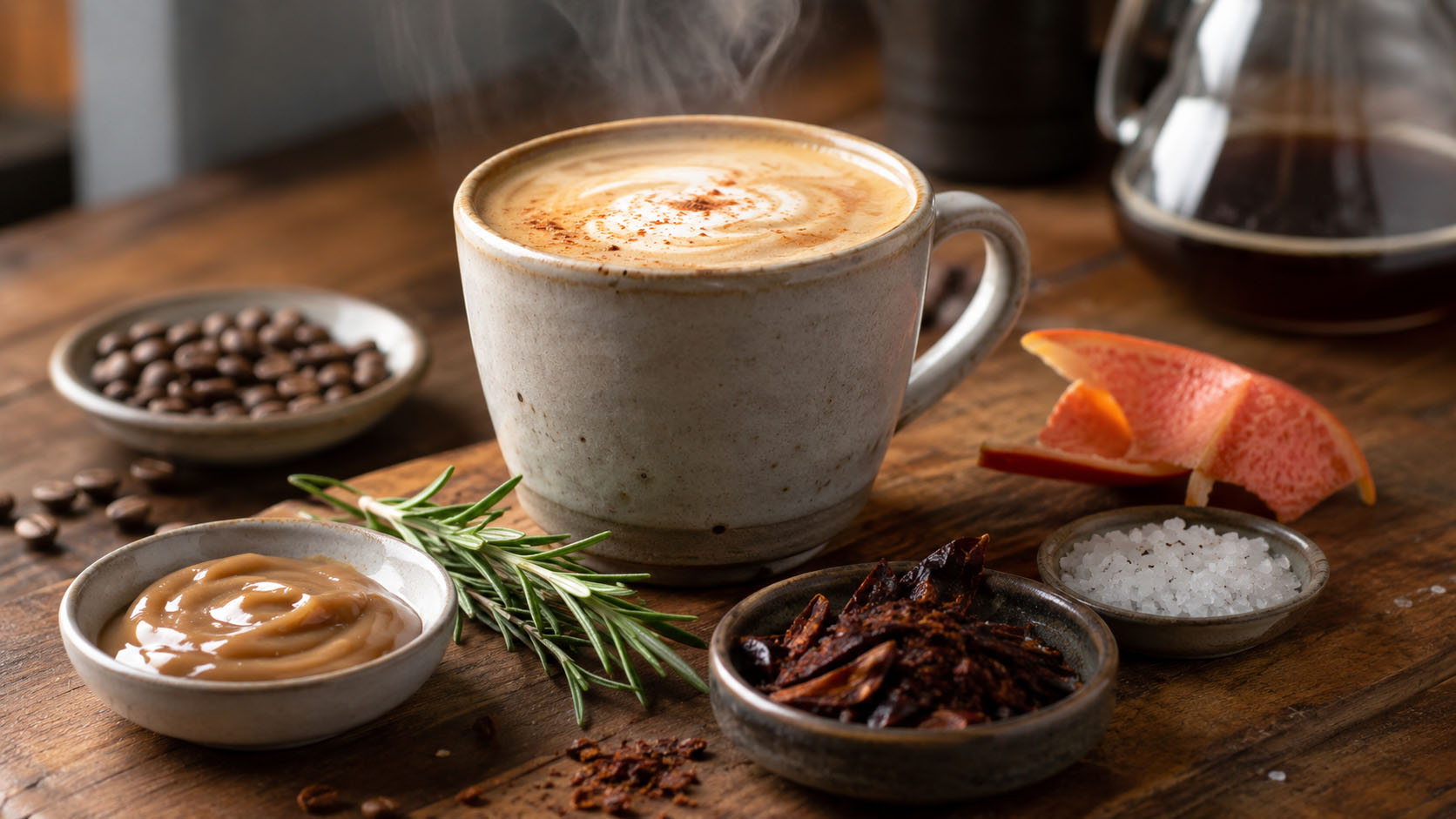
For decades, the “specialty” side of the coffee menu was defined by how much sugar we could pack into a cup. We moved from basic vanillas and caramels into the era of pumpkin spice and eventually the whipped, sugary peaks of Dalgona coffee. But as our palates have matured, a new direction has emerged that borrows more from the chef’s line than the pastry case.
We’re seeing a definitive shift toward “swavory”—the intentional pairing of sweet and savory elements. This isn’t about making coffee taste like soup; it’s about using umami, herbs, and heat to pull out specific nuances in the bean that sugar usually hides.
The Evolution of the Palate
If you look at the trajectory of modern craft cocktails or high-end chocolate, this move makes sense. Salted caramel was the gateway, teaching us that a hit of salinity actually makes sweetness feel more three-dimensional. Swavory coffee takes that logic and runs with it, treating the morning brew as a culinary canvas.
In a world where we already appreciate the “savory” notes of a heavy-bodied Sumatran or the “tomato-like” acidity of certain Kenyan beans, adding kitchen-inspired ingredients feels like a natural progression rather than a gimmick. These kinds of unexpected flavor notes are part of what makes coffee such a compelling culinary ingredient.
Miso, Smoke, and Salt
The ingredients leading this trend are chosen specifically for how they interact with coffee’s natural chemical compounds.
Miso-Caramel: While standard caramel can often be cloying, adding a touch of white miso introduces an earthy, fermented depth. The salt in the miso cuts through the bitterness of the roast, while the umami provides a long, lingering finish that mimics the “body” of a heavy cream without the heaviness.
Rosemary and Sage: Earthy herbs are being used to bridge the gap between the coffee and the cup. A sprig of scorched rosemary doesn’t just add scent; the resins in the herb highlight the woodsy, cedar-like notes often found in high-altitude medium roasts.
Smoked Chili: We’ve seen Mexican Mochas before, but the “swavory” approach is different. By using a smoked element—like chipotle or a touch of smoked paprika—you highlight the “roastiness” of the bean. The gentle heat opens up the palate, making the chocolate and nutty undertones of a classic blend feel much more vibrant.
Why the Medium Roast is the Bridge
While light roasts are prized for their tea-like clarity and dark roasts for their carbon-rich punch, the swavory trend lives and dies in the Medium Roast.
A well-executed medium roast possesses enough “Maillard reaction” sweetness to stand up to salt and spice, but still retains enough acidity to keep the drink from feeling flat. When you pair a medium-bodied blend with something like sea salt or rosemary, the coffee acts as the middle ground, connecting the bright herbal top notes with the deep, salty base.
Bringing the Kitchen to the Brewer
The beauty of this trend is that it doesn’t require a professional laboratory. It’s about small, thoughtful additions during the brewing or assembly process.
The Saline Trick: Instead of a pinch of salt in the grounds, an old-school bitterness hack, try adding two drops of a high-quality saline solution to your finished cup. It acts like a “brightness” dial for the entire flavor profile.
Infused Simple Syrups: Rather than buying pre-made bottles, simmering a bit of brown sugar with fresh thyme or cracked black pepper creates a “swavory” base that feels sophisticated rather than artificial.
The Garnish Matters: Sometimes the “savory” element is purely aromatic. Expressing a grapefruit peel over a cold brew or charring a cinnamon stick changes the perception of the coffee’s sweetness before you even take a sip.
The New Standard
As we look at the rest of 2026, it’s clear that the “foodie” influence on coffee isn’t slowing down. We are moving away from the idea that coffee is just a caffeine delivery system or a dessert in a cup. By embracing the swavory, we’re treating the bean with the same respect a chef treats a fine cut of meat or a seasonal vegetable—layering flavors to create something that is complex, balanced, and, above all, fresh.
It’s time to look past the vanilla bean and see what’s sitting on the spice rack.