


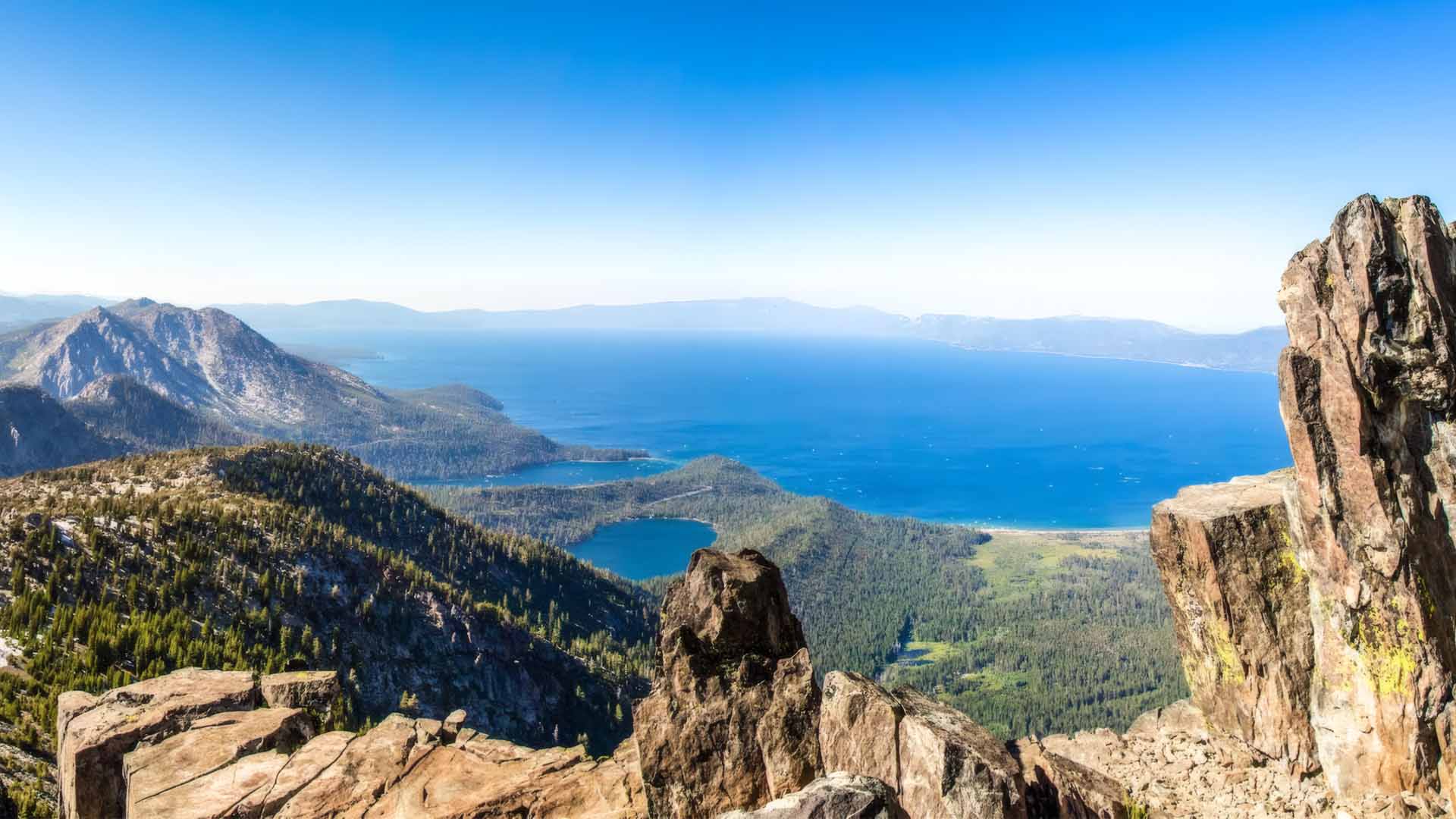
There are plenty of places where coffee can be roasted.
For Alpen Sierra, place has always been part of the process.
Our story began in the mountains, and for more than three decades we’ve roasted coffee at elevation in the Sierra Nevada region. Over that time, Mountain Roasted® Coffee has come to represent more than where our roastery happens to be located.
It represents how we approach coffee.
Careful sourcing. Thoughtful roast development. Precise control. And a belief that the environment in which coffee is roasted is another variable worth understanding rather than ignoring.
Mountain Roasted® is our way of putting a name to that philosophy.
Mountain Roasted® is Alpen Sierra’s proprietary expression for coffee roasted at elevation using roast profiles developed specifically for our environment, equipment, and coffees.
Altitude changes atmospheric pressure. As elevation increases, air pressure decreases and moisture behaves differently under heat. That means roasting at elevation isn’t simply the same process moved a few thousand feet uphill.
The roaster has to account for the environment.
For us, that means developing each coffee deliberately rather than relying on a universal roast formula.
All of those variables help determine how a coffee develops.
Elevation becomes another part of that equation.
One of the easiest ways to understand elevation is to think about boiling water.
At higher elevations, atmospheric pressure is lower, which means water boils at a lower temperature than it does at sea level.
The same change in atmospheric pressure also affects the roasting environment.
Coffee roasting is far more complex than boiling water, of course, but moisture loss and heat transfer are fundamental parts of the process.
During roasting, green coffee gradually releases moisture while heat drives the chemical reactions responsible for sweetness, aroma, acidity, body, and roast character.
At elevation, those processes have to be managed with the surrounding environment in mind.
That’s where experience matters.
We’ve spent decades learning how our coffees behave here.
Claims about high-altitude roasting can sometimes make the process sound almost magical.
We prefer to think about it more practically.
Elevation does not turn an average green coffee into an exceptional one.
It does not replace careful sourcing.
It does not replace a skilled roasting team.
And it certainly does not mean every coffee should be treated the same way.
What elevation does is create a particular roasting environment.
Our responsibility is to understand that environment and use it well.
At Alpen Sierra, we’ve found that roasting at elevation allows us to develop coffees gently while still bringing sugars and flavors forward in a complete, balanced way.
That approach is central to what we mean by Mountain Roasted®.
Before altitude matters, the coffee itself has to be worth roasting.
Quality sourcing has always been the foundation of Alpen Sierra’s approach.
We evaluate coffees through cupping and look at factors such as:
The roast can only reveal what is already present in the green coffee.
A beautifully grown and processed coffee gives the roasting team something to work with.
A poor-quality coffee doesn’t become great just because it was roasted in the mountains.
That’s why quality—not simply price—drives our sourcing decisions. Our guide to specialty coffee explores what sets a premium coffee apart.
You can learn more about that philosophy in our Coffee Roasting Process.
Coffee doesn’t arrive at the roastery as a standardized raw material.
A dense high-elevation microlot behaves differently from a softer coffee grown at lower elevations.
A washed coffee behaves differently from a natural-process coffee.
A light roast requires a different development strategy than a Full-City or dark roast.
That’s why our roasting team evaluates the coffee in front of us rather than forcing every bean through the same profile.
The idea is simple:
Roast for the coffee.
Not for the clock.
Not for the color alone.
Not because that’s what worked for the last batch.
For an expressive microlot, the goal might be preserving bright fruit, florals, or acidity.
For a Full-City coffee, we may want additional sweetness, body, and caramelization.
For a dark roast, the goal may be deeper chocolate, roast intensity, and body without taking the coffee into harsh or burnt territory.
That spectrum is part of what makes roasting interesting.
Our guide to Light Roast vs. Medium Roast vs. Dark Roast Coffee takes a closer look at how roast development changes what ends up in the cup.
Roasting is often described as part art and part science.
That description has stuck around because it’s accurate.
Experience and sensory judgment tell us what we want from a coffee.
Technology helps us repeat it.
At Alpen Sierra, we use a Loring Smart Roast system, which combines controlled convective heat with a paddle-churned roasting environment.
The system gives our roasting team precise control over the variables that matter during development.
That includes heat application, time, temperature, airflow, and roast progression.
Digital control also allows us to document and repeat successful profiles.
That doesn’t remove the craft.
It gives the craft better tools.
A roast profile still has to be designed.
The coffee still has to be tasted.
Adjustments still have to be made.
The roaster still has to know what they are looking for.
The difference is that once we find it, modern roasting technology helps us get back there.
There isn’t one Mountain Roasted® flavor.
And that’s important.
Alpen Sierra produces light, medium, Full-City, dark, single-origin, microlot, and blended coffees.
They aren’t supposed to taste the same.
Mountain Roasted® is not a roast degree.
It’s an approach to developing flavor at elevation.
Depending on the coffee, that might result in a cup that is:
The objective is not to create one signature flavor and force every coffee into it.
The objective is to let each coffee reach the profile we believe suits it best.
You can see that philosophy across the Alpen Sierra coffee lineup.
Our Microlot Reserve coffees are selected to showcase exceptional origin, variety, and processing characteristics. These coffees often benefit from roast profiles that leave plenty of room for nuance and individuality.
Our signature blends take a different approach.
Rather than highlighting one origin, blends allow us to combine coffees and roast degrees intentionally to build a particular flavor experience.
Big Blue Tahoe, for example, combines multiple origins and roast levels to create a cup that moves from bright and winey toward bittersweet chocolate, spice, and a fuller finish.
The Organic Big Blue Tahoe takes that same sense of place into a Certified Organic blend built around bright, spicy, and rich flavors.
Different coffees.
Different goals.
One roasting philosophy.
Alpen Sierra didn’t invent its mountain identity in a conference room.
It was there from the beginning.
Founder and Master Roaster Christian Waskiewicz envisioned Alpen Sierra while traveling in the Austrian Alps in 1988. The first Alpen Sierra coffee was served on the South Shore of Lake Tahoe in 1991.
The Alps and Sierra Nevada became more than the backdrop.
They shaped the brand.
Skiing.
Trekking.
Cold mornings.
Long days outside.
Coffee before first chair.
Coffee at the trailhead.
Coffee around the cabin table after everybody comes back in.
Those experiences helped form the idea of coffee as part of mountain life.
You can read more about that beginning in Our Story.
Mountain Roasted® connects that history with the way we roast today.
This distinction is worth making.
You’ll often see coffee marketed by the altitude where it was grown.
That matters.
Growing elevation can influence bean density, maturation, acidity, and other characteristics of green coffee. Our deep dive into coffee variety explores the importance of growing conditions and genetics.
But Mountain Roasted® refers to something different:
Where and how the coffee is roasted.
A coffee might be grown high in the mountains of Central America, Africa, or South America and later roasted here in the Sierra Nevada region.
Those are two separate stages of the coffee’s journey.
Growing conditions help determine what potential arrives inside the green bean.
Roasting determines how we develop that potential.
Both matter.
Once the coffee leaves the roastery, one final step remains.
Yours.
Brewing has an enormous influence on what you taste.
Coffee-to-water ratio, grind size and water quality, temperature, and brew method can all change how the flavors developed during roasting appear in the cup.
That’s why we spend time educating people about brewing rather than pretending the roaster’s work is the end of the process.
For a reliable starting point, our Coffee-to-Water Ratio: The Complete Brewing Guide walks through ratios for pour-over, automatic drip, French press, AeroPress, cold brew, and espresso.
You can also explore Alpen Sierra’s Brewing Methods for our Chemex, auto-drip, and French press techniques.
The better the brewing, the easier it is to taste what the coffee and the roast have to offer.
The Mountain Roasted® idea extends beyond the roasting room.
Coffee has always traveled with us.
On ski mornings.
Road trips.
Camping weekends.
Fishing days.
Bike rides.
Cabins.
Hotels.
Early starts when getting outside matters more than getting everything perfect.
That thinking led to products such as Alpen Sierra’s Pour & Explore single-cup pour-over, created specifically to make good coffee easier to take along.
It’s also something we explored in The Traveling Barista: Portable Coffee Rituals for Outdoor Adventures.
Mountain coffee doesn’t have to be complicated.
Sometimes it just needs to be good enough that you’re glad you packed it.
Plenty of coffee brands can talk about mountains.
For Alpen Sierra, the mountains are part of our history, our community, and the way we learned the craft.
Mountain Roasted® gives that idea a name.
It represents coffee selected deliberately.
Roasted intentionally.
Developed at elevation.
Tasted critically.
Repeated carefully.
And made for people who believe a cup of coffee can be part of where the day takes them.
It isn’t about claiming altitude is the only thing that makes Alpen Sierra coffee different.
Far from it.
Great coffee is the result of many people and many decisions.
Farmers.
Processors.
Exporters.
Importers.
Roasters.
Brewers.
The environment matters, too.
Mountain Roasted® simply defines our part of that journey.
Mountain Roasted® Coffee starts with a simple idea:
Place matters.
Where coffee is grown matters.
How it is processed matters.
Where and how it is roasted matters.
And how you brew it matters.
For Alpen Sierra, roasting at elevation has been part of the craft for more than three decades.
We’ve learned how our coffees respond here, how our equipment behaves here, and how to develop roast profiles that bring sweetness, clarity, body, and balance into the cup.
That experience is what Mountain Roasted® represents.
Not a shortcut.
Not a gimmick.
A way of roasting that belongs to Alpen Sierra.
From the mountains.
For wherever you’re headed next.
Mountain Roasted® is Alpen Sierra Coffee’s proprietary approach to roasting coffee at elevation using profiles developed for our roasting environment, equipment, and individual coffees.
Higher elevation means lower atmospheric pressure, which changes the environment in which heat and moisture behave. Roasters operating at elevation need to account for those conditions when developing and repeating roast profiles.
No. Mountain Roasted® is not another category like light, medium, Full-City, or dark roast. Alpen Sierra applies its Mountain Roasted® philosophy across multiple roast degrees and coffee styles.
No. High-altitude coffee generally refers to coffee grown at higher elevations. Mountain Roasted® refers to Alpen Sierra coffee being roasted at elevation.
No. Roast development is adjusted according to the coffee’s origin, variety, processing method, moisture, density, desired roast degree, and sensory characteristics.
Alpen Sierra roasts its coffee at its production facility in Minden, Nevada, in the Sierra Nevada region. Elevation 4,750 Ft aSL. The company began serving coffee on Lake Tahoe’s South Shore in 1991.
Our flagship signature house blend, Organic Alpenglow. For a distinctly Tahoe expression of the brand, Big Blue Tahoe is one of Alpen Sierra’s signature blends. For something more origin-driven, explore the current Microlot Reserve and single-origin coffees.


